This website uses cookies.
Using a few necessary cookies is unavoidable to operate our store. However, you can decide on the cookies used to improve our services and personalize advertisements.
You can read more about cookies here.


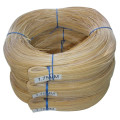
Chair cane is the classic flat strand traditionally used for caning chair seats, and is still used for repairs today. It is made from the outer skin of the rattan palm. Only the highest quality materials are suitable for making this product, as it must be flexible, resilient, and durable. The nodes where the leaves grew are sanded smooth, so they do not interfere with the weaving process.
It is split from natural rattan material, using the peeled outer skin of the palm. Width: 1.75 mm, 2.0 mm, 2.25 mm, 2.5 mm, 2.75 mm, and 3.0 mm. Length: minimum 2.4 m. The areas at the nodes where the leaf stubs were are sanded. Packaging: 0.25 kg per roll, which is typically enough for one chair seat and backrest.
The most common use of chair cane supplies UK is repairing cane chairs, as it was used for crafting classic, hand-woven seats and backs. It can also be used for rattan for furniture repairs, as well as for restoring other seat caning or weaving projects. For antique rattan furniture repairs, the best solution is to use a matching material. This strand can be used for decorative binding and structural reinforcement, but due to its narrow width, it is less commonly used for these purposes. By clicking the link, you can see the process of replacing the cane for chair repair, in case the weaving is still new but a single strand has snapped.
The outer skin of the rattan material roll UK is stripped with blades and the resulting rattan strips are sorted so only high-quality strands remain. They are split to the desired width, and the areas where the leaves grew (nodes) are sanded smooth. Before use, the finished replacement cane seats should be moistened or soaked for a few minutes so they become pliable and do not break. Throughout the rest of the weaving process, it should also be kept damp, for example by lightly spraying with water. Paint does not adhere well to the outer skin of the rattan rod, but it can be stained with a dye mixed into Shellac or Beizen lacquer.
Hand-woven octagonal chair cane strips, as chair cane supplies UK, are also made from rattan material UK. In the wooden frame of the chair, holes are drilled all around, and the individual strands are woven through these holes. Machine-woven cane webbing is made from the same binding cane, but it is pre-woven on a loom. The result is a product supplied in rolls. The rolled octagonal cane webbing is pressed into a groove in the wooden frame using wedge-shaped reed. This latter technique has been used since the 1960s. There is no structural difference between seat caning woven on site to a wooden frame and machine-woven cane. If seat caning or restoration is needed, the best results are achieved by using the same technique as the original manufacturing.
Chair cane is a natural rattan material mainly used for restoring caned furniture and for repairing cane chairs. This binding cane is made from the outer skin of the plant, which makes it strong, flexible, and highly load-bearing. It is an excellent material for rattan for furniture repairs, especially for fixing the stressed areas of seat caning and other woven chairs. The glossy smooth surface does not easily absorb finishing materials but can be treated with dyes soluble in Shellac or Beisen lacquer.
check_circle
check_circle



Comments (0)
Your review appreciation cannot be sent
Report comment
Report sent
Your report cannot be sent