This website uses cookies.
Using a few necessary cookies is unavoidable to operate our store. However, you can decide on the cookies used to improve our services and personalize advertisements.
You can read more about cookies here.


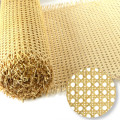
Rattan sheets are a machine-woven, perforated rattan roll made from the outer bark of the rattan palm. This material is primarily used for furniture, such as the seat and backrest of a thonet chair, but also for sophisticated interior design solutions. The weave pattern is octagonal. This material provides an airy, elegant look, while being functionally strong. With proper use and care, premium rattan materials can last for decades.
Material: rattan (rattan palm) bark. Pattern: octagonal, density 2 holes per inch. Width: 60 cm, with the weaving threads extending at least 2 cm beyond the nominal width on each side. Roll length: 15.24 m (50 feet). Quality: S (superior) premium, ideal strength for chair caning. This product can be purchased by the meter, not only in rattan roll.
To make it easier to work with, S superior quality thonet chair caning material should be soaked in water for 15-30 minutes. This way it softens and does not break. Do NOT soak it in regular tap water! Use DISTILLED or DEIONIZED water. If you use regular tap water for thonet chair caning, the material can become dull. If you soak the material in distilled or deionized water, it will not discolor.
This is a natural material obtained from the outer bark of the rattan palm, native to Southeast Asian tropical regions. The rattan palm grows fast, making it an environmentally friendly and renewable source. Premium rattan sheets made from rattan are strong and flexible, making them ideal for furniture. We offer a 10% discount on the price when you purchase a whole rattan roll!
Restoring a thonet chair involves replacing the damaged or worn out chair caning, as the individual strands cannot be replaced. This is a multi-step process where the old material is removed, the new rattan material is prepared (soaked), and then carefully fastened to the chair frame. The goal is to restore the original condition and durability of the chair. Soaking the rattan sheets softens them, making them flexible and manageable, which makes stretching and fitting into the frame easier. It is important to always soak the S type material in distilled or deionized water! Special wedge-shaped peddig cane is used for fixing the rattan sheets into the groove, and this can also be purchased in our webshop. With our premium quality materials, restoring a thonet chair is also easy! If you purchase the materials from us and request it, we will provide you with a detailed chair repair video guide. Thonet chair seats after restoration.
This is an extremely versatile material used for restoring chairs and rocking chairs, as well as for making other products. It is an excellent solution for chair seats, door inserts, small furniture decoration, radiator cover panels, lampshades, and rattan room divider as well. Its natural texture gives warmth and uniqueness to your interior space. Its perforated structure makes it ideal to use it as a radiator cover panel. It allows heat through easily, so the efficiency of a radiator is only minimally reduced. This classic weave pattern is also characteristic of Thonet chairs. Chair caning used as door panel inserts. We specifically recommend this material for restoring thonet chairs and cesca chairs!
Thonet furniture originated in the mid-19th century, thanks to Michael Thonet's revolutionary bentwood technique. These light and elegant pieces quickly became popular in Europe and worldwide. The classic design and high-quality craftsmanship have made them timeless. When restoring thonet furniture with perforated weave, it is important to pay special attention to the condition of the chair caning and the preservation of the original wood. Professional restoration significantly extends their lifespan and restores their original beauty. It is worth entrusting the work to a professional to maintain the authentic character of the furniture.
Perforated rattan material is both decorative and functional, used as radiator cover panel or as inserts for a rattan room divider. They allow for air circulation between two sides of the door. This solution can be used not only for doors but also for drawer fronts and cabinet doors. It provides a premium quality, elegant, and aesthetic surface, showcasing the craftsmanship.
Rattan sheets made from the rattan bark are difficult to stain and dye on their shiny front side. We have achieved results with dye mixed into shellac or spirit-based lacquer. Always test the finish on a small piece first before applying any surface treatment. Ensure that the stain remains on the surface or if it can be wiped off. In every case, use solvent-based lacquers instead of water-based ones, since water-based lacquers cause the rattan material to stretch. After drying, the caning regains its original tightness.
This product may also be known as: chair caning for cesca chairs.
The TH-1/2-60-S is the strongest rattan sheets, primarily used for chair caning. The open-weave rattan sheets are a braid made from natural materials, featuring a distinctive octagonal pattern. This material is not only highly durable but also provides excellent ventilation to our furniture. A premium quality variant that is strong, durable, flexible and long-lasting, making it perfect for elegant interior solutions and for refurbishing a thonet chair or cesca chair.
check_circle
check_circle



Comments (0)
Your review appreciation cannot be sent
Report comment
Report sent
Your report cannot be sent