This website uses cookies.
Using a few necessary cookies is unavoidable to operate our store. However, you can decide on the cookies used to improve our services and personalize advertisements.
You can read more about cookies here.


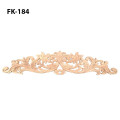
The FK-184 is a classic carving decorated with acanthus leaves pattern. Solid wood crown molding, which is well suited for furniture making. Precise CNC machining ensures that every detail of the carving is clearly visible and smooth.
The carving's dimensions: width from 60 cm to 80 cm, height from 13 cm to 17.5 cm, thickness: 1.1 cm, available in various sizes. The size tolerance is plus or minus 3%. The plant ornamentation features a floral pattern and acanthus leaves pattern. Its material is exotic (rubber) wood. Rubber wood offers ecological advantages, as it is made from the by-product of rubber plantations, making it a recycled material. Its international availability and competitive price make it a cost-effective option for furniture making and restoration. Its light, cream-colored base combines well with other woods and is excellent for various finishes. It is untreated and natural.
These CNC-made decorative wooden mouldings have precise dimensions and fit well to furniture panels. The FK-184, shaped as a wood crown molding, is easy to attach and comes pre-sanded, so no further sanding is needed before painting or lacquering. The depth of the acanthus leaves pattern carving accentuates the decorative details.
The wood crown molding is mainly used to decorate doors, cabinet tops, and furniture tops. Decorative wooden mouldings can be easily combined with other carved elements, making them ideal for furniture making. In fine woodworking projects, its precise fit and size consistency make it a popular choice. We strive to keep the 3% margin of error during the production of the decorative wooden mouldings, but small variations may still occur.
The wood crown molding is suitable for repairing old furniture, as a crown for new cabinets, or as an addition to wall coverings. The acanthus leaves pattern is created in a classic proportion system while the floral patterns lend a natural effect to the carving. During furniture making, this model fits well with oak, beech, and walnut-colored surfaces. Since it is supplied in a natural finish, it allows for any type of surface treatment.
Decorative wooden mouldings are applied using wood glue. The ornament arrives sanded, so you only need to prepare the receiving surface before gluing. In fine woodworking practice, small nails are often used to fix the carving. For larger wood crown molding, it is necessary to clamp the bond for several hours after gluing.
The untreated wood crown molding can be freely painted, stained, oiled, or lacquered. The details of the acanthus leaves pattern and flowers stand out more after painting. During furniture making, a test painting is recommended to check the color effect. In fine woodworking, lacquering is especially recommended because it improves cleanability and enhances the grain.
The floral pattern on decorative carvings is meant to express the beauty of life and the cycle of nature. The gently carved flowers and acanthus leaves pattern create a soft, harmonious feeling on furniture. This floral pattern inspires a sense of eternal renewal and happiness, bringing warmth and peace to homes. The garlands of flowers that come to life on carved decorative wooden mouldings also reflect emotional bonds and human connections. Additionally, they emphasize artistic precision and craftsmanship in the art of ornamentation.
The acanthus leave pattern is one of the oldest and most well-known decorative motifs in Western ornamentation, present in architecture, visual arts, furniture and applied arts from antiquity to the present day. As a decorative element, it became iconic not for its botanical accuracy, but for the aesthetic appearance of its stylized leaves. The Romans used it richly and in detailed forms in furniture decoration. In Renaissance and Baroque art, the acanthus leave pattern often appeared on furniture, frames and mouldings. In stylized form, it also reappeared in later art styles, as a symbol of timelessness and elegance.
If you can see and select the second class product, there are also a few second class ornaments made from that carving. These items may have minor defects such as discoloration, warping, or small chips or cracks. If you are interested in our second class products currently in stock, please contact us so that we can provide you with more detailed information and, if requested, photographs of these carvings.
The FK-184 decorative wooden mouldings feature classic acanthus leaves pattern and floral pattern. This product is suitable for decorating doors, cabinets, and furniture surfaces, and is equally useful in furniture making or fine woodworking projects. Order the FK-184 wood crown molding and complement your furniture with a detailed wooden piece featuring a classic design. Thanks to its advantageous properties, it can help bring many interior design ideas to life.
check_circle
check_circle



Comments (0)
Your review appreciation cannot be sent
Report comment
Report sent
Your report cannot be sent