This website uses cookies.
Using a few necessary cookies is unavoidable to operate our store. However, you can decide on the cookies used to improve our services and personalize advertisements.
You can read more about cookies here.


The surface of the wooden carvings is ready for painting or staining, as it is sanded before packaging. Any item you can add to your cart is in stock and can be shipped immediately, so there is no waiting time. If you order in the morning, we will package it by the afternoon. No need to design a custom pattern, simply choose from our selection. Below you will find some helpful ideas on how to use the ornament.
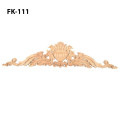
The dimensions of the carving are width: 60 cm, height: 13 cm, thickness: 1.1 cm. Its size tolerance is plus or minus 3%. The wood crown molding is an escutcheon decorated with a plant chalice motif. It is made of exotic wood, which is actually known as rubberwood. It comes from the secondary use of rubber plantations, making it an excellent choice from an environmental perspective. Thanks to its favorable price and good qualities, it is becoming a popular alternative alongside traditional European wood types. Since its color is light and natural, it provides a neutral base for all kinds of surface treatments—from painting to staining to waxing. This is an untreated ornament.
These wooden carvings are made from exotic wood, which is softer than beech and harder than pine. For example, this material is ideal for making wood crown molding or other cabinetmaker decorative work because it is easy to carve. It's important to emphasize that we only offer wooden carvings made from real wood, not pressed sawdust or plastic.
The wood crown molding, also known as a tympanum, is a distinctive and decorative element mainly used at the top of furniture or doors and windows. The FK-111 is among our larger ornaments, so we recommend it as a central decoration in cabinet repair. In addition to traditional uses, carved ornaments are also excellent for decorating interiors, for example as a wall decoration. In such cases, gluing is recommended, although silicone can also be used.
Before gluing, slightly sand and clean the surface where the molding will be attached. Wooden carvings should be attached with wood glue, which typically dries in 24 hours. After applying the right amount of glue, position it in place and press against the surface until cured. If you opt for mechanical fastening, a small-headed wire nail can also be used. In this case, drive the nail heads below the surface and cover them with wood filler.
Our wooden carvings are sold untreated, giving you full creative freedom. You can paint, lacquer, or stain the carved surfaces as you prefer, so they match the style of your furniture. For example, you may choose a layer of lacquer for lasting protection against wear, or select paint to highlight the details of the carving. The decision is completely up to you and depends on the final result you wish to achieve.
Nowadays, there is no need to look for an expensive ornament carving master, as a classic furniture ornament can be made with CNC machines. Originally, creating carvings was a task that required great skill and time. With modern technology, we use CNC to help revive this craft. This way, excellent quality and affordable wood carvings are also accessible to you.
The chalice pattern in ornamentation mainly appears as a religious, symbolic, and classicist element. It is common for the chalice to form the center of a symmetric composition from which tendrils, flowers, or geometric elements emerge. It appears especially on classicist and Empire style furniture, where it is combined with garlands, tendrils, or flame motifs. This motif is also used as inlay, painted, or carved, often as the central decoration on cabinets, sideboards, or mirrors. Thanks to its elegant and harmonious form, the chalice motif is a timeless decorative element, suitable for many styles.
The escutcheon pattern in furniture art primarily expressed rank, family heritage, and social status. It often appeared as wooden carvings or inlaid marquetry on chests, cabinets, and door fronts. On Renaissance and Baroque furniture, the escutcheon was framed by rich ornaments, such as tendrils and acanthus leaf decorations. Over time, the shield shape became more of a stylized, decorative element. The escutcheon motif served not only as decoration but also as a visual representation of the owner's identity and history.
If you can see and select the second class product, there are also a few second class ornaments made from that carving. These items may have minor defects such as discoloration, warping, or small chips or cracks. If you are interested in our second class products currently in stock, please contact us so that we can provide you with more detailed information and, if requested, photographs of these carvings.
The FK-111 wooden carving features a wood crown molding decorated with an escutcheon motif. It is made from exotic wood and available in one size. Both hobbyists and cabinetmakers appreciate it, as it can make any furniture piece unique. It is also gladly used in today's interior design to create a classic style. Get inspired by Naturtrend and choose from the most beautiful wooden carvings!
check_circle
check_circle



Comments (0)
Your review appreciation cannot be sent
Report comment
Report sent
Your report cannot be sent